CALeDNA
Links
Project Details
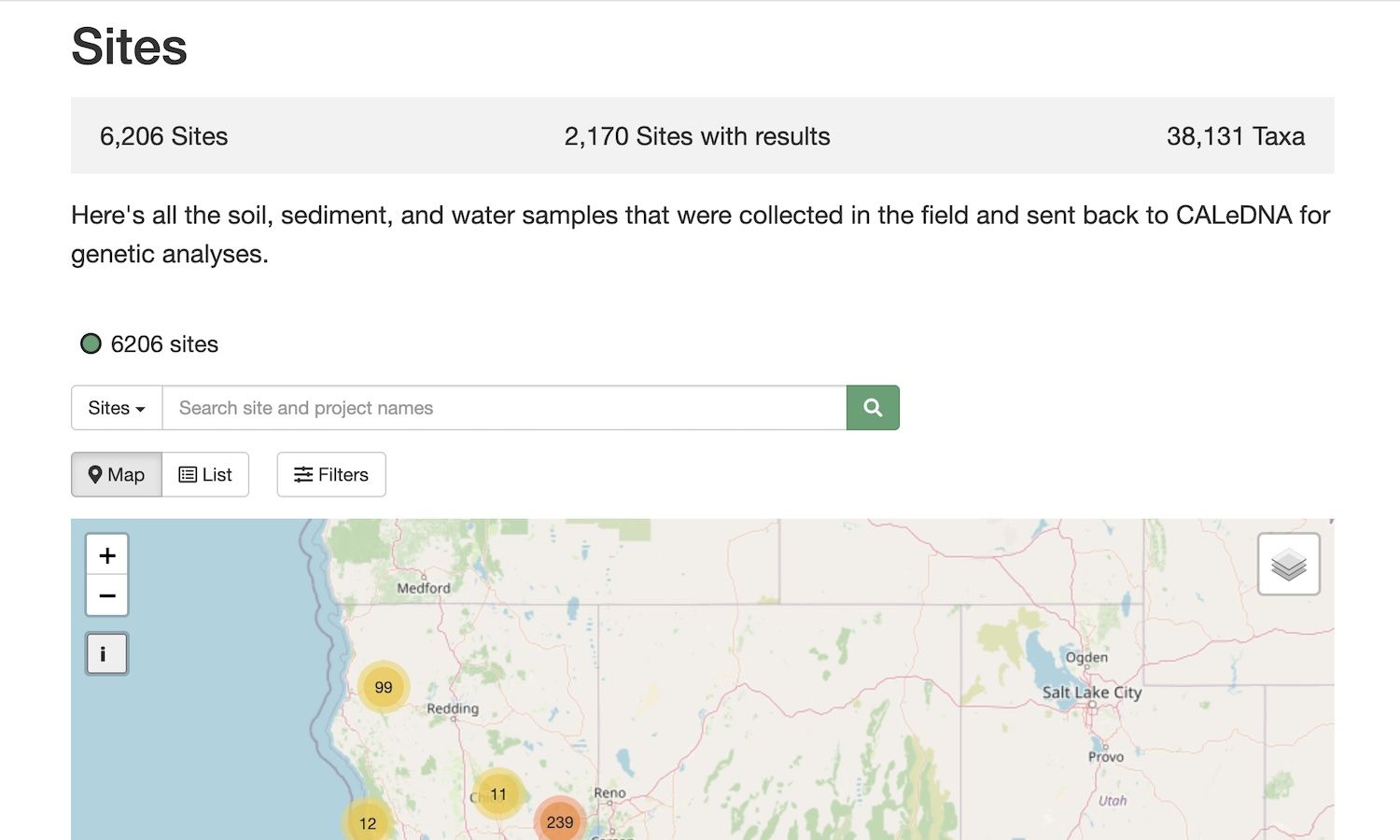
In November 2017 I attended a bioblitz for CALeDNA, a University of California community science program that monitors California’s biodiversity through environmental DNA (eDNA). While talking to the executive director of CALeDNA, I realized that I could use my coding skills to help the program. What started as a four-week project to create an online map that shows the location of collected eDNA samples, turned into a three year collaboration with the CALeDNA researchers to create an open-data portal that communicates biodiversity information to the public, students, and researchers. I learned various taxonomy concepts, datasets, and tools in order to connect CALeDNA data to National Center for Biotechnology Information (NCBI) taxonomy, iNaturalist, and Global Biotic Interactions (GloBI).
When I started the site, I didn't find any other sites that put the eDNA data online. I had to figure out how to turn pages and pages of CSV data with thousands of taxa into an interactive website. As a starting point, I looked at other sites that had open biodiversity data such as iNaturalist, GBIF, Atlas of Living Australia. I had fun trying to figure out a way to present the eDNA data in a way that both non-scientists like myself and scientists would find useful.
Presentations/Publications
- SciCommCamp 2018 - Coding to Communicate: Creating an online platform to communicate California's biodiversity
- California Agriculture - The CALeDNA program: Citizen scientists and researchers inventory California’s biodiversity
Tech Stack
- Ruby on Rails
- Vue
- Leaflet
- D3
- Previous: After iNaturalist
- Next: City Nature Challenge Viewer